ForensicShield Blog
What opposing counsel already knows about AI, evidence standards, and your methodology — and what to know first.
 AI in Forensic Practice
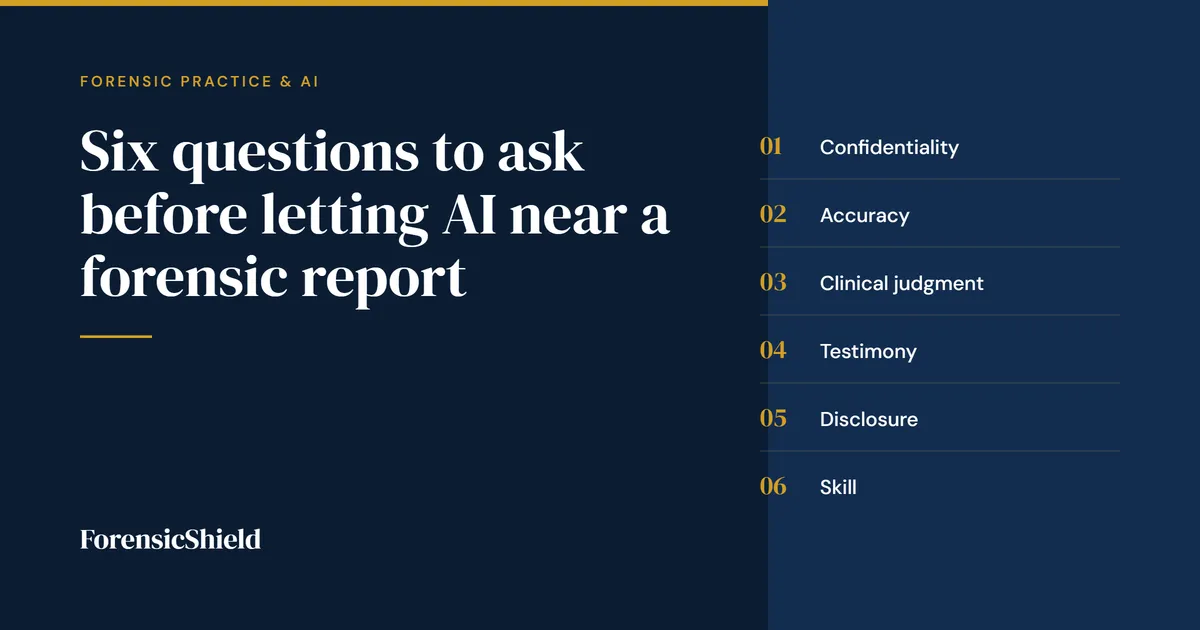
Six Questions Forensic Evaluators Should Ask Before Letting AI Near a Report
Six concerns forensic evaluators raise about AI, and the question to ask any tool before uploading a single page.

 AI in Forensic Practice
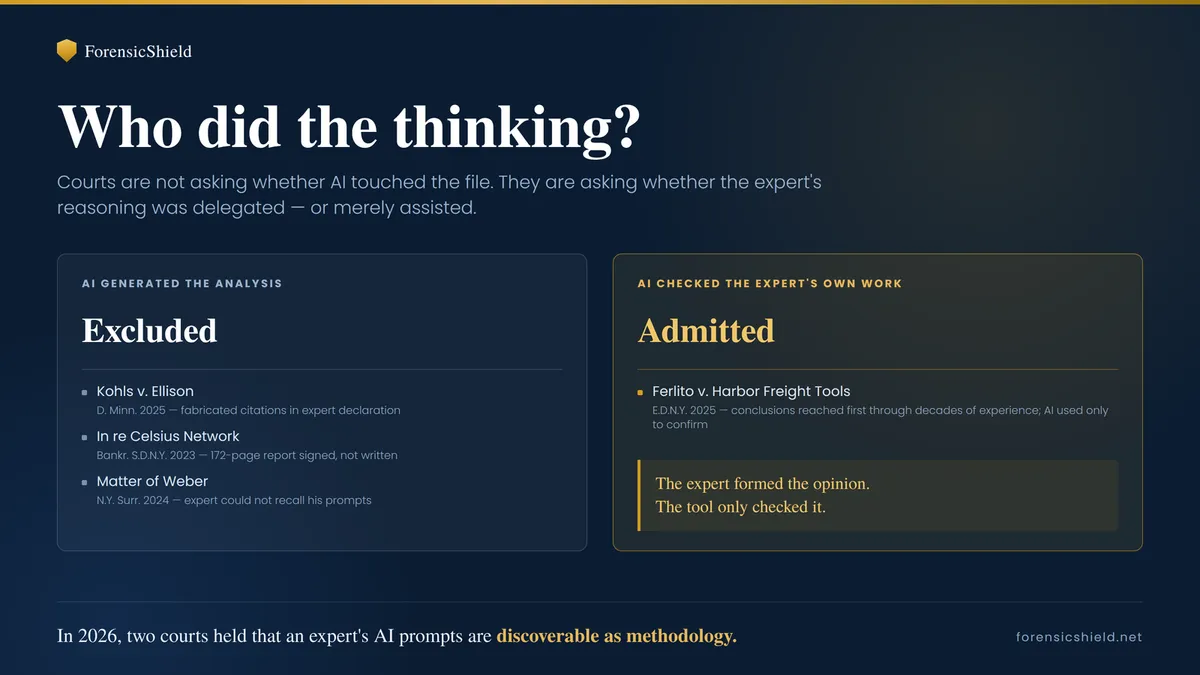
Your Prompts Are Discoverable: What 2026's AI Rulings Mean for Forensic Evaluators
Federal Rule of Evidence 707 stalled in June. Meanwhile, two courts made an expert's AI use discoverable as methodology. Here is what changed, and what it means for your next report.
 Regulatory Updates
What the AI Disclosure Laws Actually Require, and Why a Verification Step Isn't What They're Worried About
AI disclosure rules for forensic work are arriving fast and unevenly, from state statutes to judge-specific court orders to fresh guidance from psychology and psychiatry boards. This piece maps what those laws actually require, why most of them target AI that interacts with the evaluee rather than a tool used to check a finished report, and how to think about disclosure in a way that protects your credibility on the stand rather than threatening it.
 AI in Forensic Practice
Is a Quality-Assurance Step a Liability? What Capital Work Taught Me About Defensibility
 ForensicShield Updates
Clarifying Common Misconceptions About ForensicShield
 AI in Forensic Practice
Most AI Tools Say They Verify Case Law. Here's a Six-Minute Test to Find Out If Yours Actually Does.
 AI in Forensic Practice
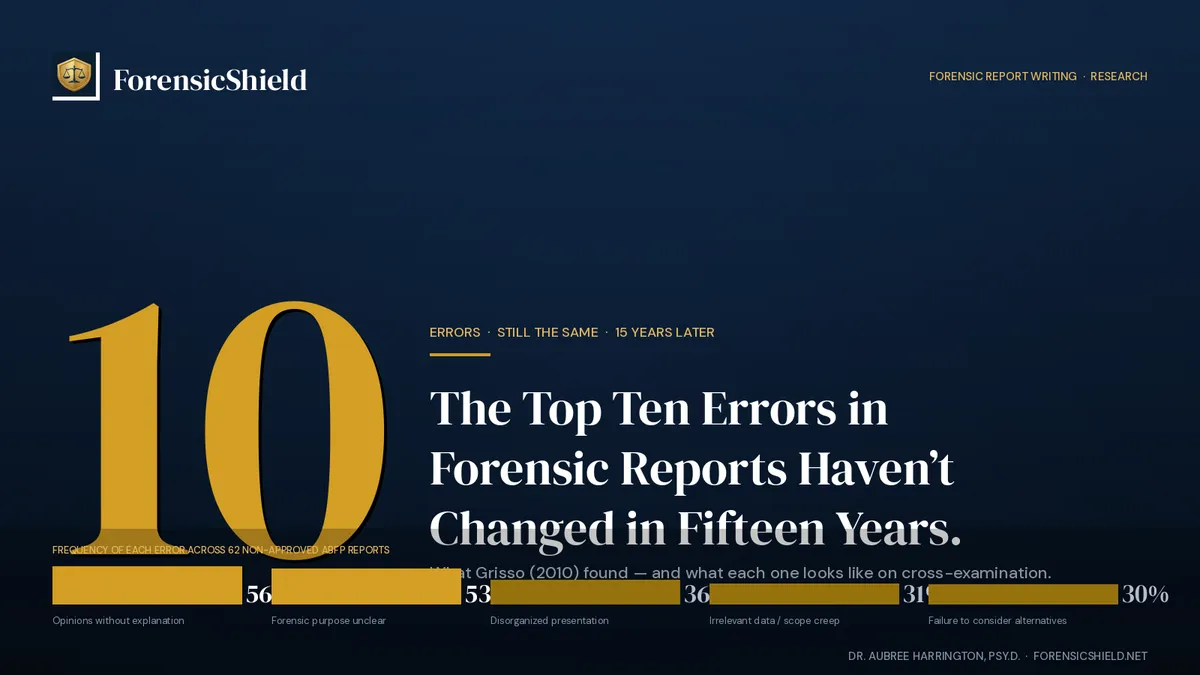
The Top Ten Errors in Forensic Reports Haven't Changed in Fifteen Years. Here's What They Look Like on Cross-Examination.
 ForensicShield Updates
You Told Us What to Fix. Here’s What We Built.
ForensicShield’s first week of beta testing led to major improvements in analysis accuracy, cross-examination preparation, and user experience. Guided by real feedback from forensic psychologists, the platform now delivers more precise, jurisdiction-aware, and courtroom-ready insights.
 Regulatory Updates
Why Pasting Your Forensic Report Into ChatGPT Could Cost You $50,000 — And What to Do Instead
Forensic psychologists increasingly turn to AI tools for report review, but many don’t realize the significant HIPAA risks involved. This article breaks down how using general AI platforms with forensic reports can expose protected health information—and what “HIPAA-compliant AI” actually requires in clinical and legal settings.
See ForensicShield in action.
Review a real court preparation packet — or start your free trial and upload your first report today.